I know this isn't the premise of the site but you are smart people and I need help. I'm working on finding a way to evoke YHVH, my deity, however He has no sigil and uses His name has one. Problem is, I have no idea what the real pronounciation is.
A kabbalistic jew I know claims it is ya-hoe-way.
I know to most Christians, at least, prayer is the only method of evokation but I am curious.
How do you think YHVH is pronounced?
How do you think YHVH is pronounced?
Feel free to send me a PM or an email. Expect faster responses by email.
-
ANONYMOUS1999
- Posts: 122
- Joined: 21 Apr 2017 01:36
- Contact:
Re: How do you think YHVH is pronounced?
IAOUE.
AE I O U.
AE I OWE U ?
AE I OWE U.
https://www.youtube.com/watch?v=mUYf2yu78Ts
https://www.youtube.com/watch?v=OecY9I_oPv8
U EWO I EA.
U EWO I EA.
U O I EA.
EUOAI.
AE I O U.
AE I OWE U ?
AE I OWE U.
https://www.youtube.com/watch?v=mUYf2yu78Ts
https://www.youtube.com/watch?v=OecY9I_oPv8
U EWO I EA.
U EWO I EA.
U O I EA.
EUOAI.
-
Redbeck
- Site Admin
- Posts: 2147
- Joined: 19 Dec 2010 15:42
- Location: The Rookery, 3rd Horse Chestnut along, St Johns, Britain. Teacher leave our nuts alone!
- Contact:
Re: How do you think YHVH is pronounced?
Good evening Nazheek and ANONYMOUS1999 (Your approach to this question is most creative, love the Cathar chants!).Nazheek wrote: 10 May 2017 19:41 I know this isn't the premise of the site but you are smart people and I need help. I'm working on finding a way to evoke YHVH, my deity, however He has no sigil and uses His name has one. Problem is, I have no idea what the real pronounciation is.
A kabbalistic jew I know claims it is ya-hoe-way.
I know to most Christians, at least, prayer is the only method of evokation but I am curious.
Anyway, my response is that most Hebrew scholars prefer Yahweh (ancient pronunciation) or Yahveh (modern pronunciation) the Yah is phonetically 'Yar' (as in car) whe is 'way' (long a) and veh is 'vay' (long a, as in, invader), so: Yar-way or Yar-vay.
Re: How do you think YHVH is pronounced?
I'm more interested in what magick practicers think than what scholars think at the moment. Thank you for the response though.Redbeck wrote: 10 May 2017 21:03Good evening Nazheek and ANONYMOUS1999 (Your approach to this question is most creative, love the Cathar chants!).Nazheek wrote: 10 May 2017 19:41 I know this isn't the premise of the site but you are smart people and I need help. I'm working on finding a way to evoke YHVH, my deity, however He has no sigil and uses His name has one. Problem is, I have no idea what the real pronounciation is.
A kabbalistic jew I know claims it is ya-hoe-way.
I know to most Christians, at least, prayer is the only method of evokation but I am curious.
Anyway, my response is that most Hebrew scholars prefer Yahweh (ancient pronunciation) or Yahveh (modern pronunciation) the Yah is phonetically 'Yar' (as in car) whe is 'way' (long a) and veh is 'vay' (long a, as in, invader), so: Yar-way or Yar-vay.
Would the word not make sense to pin to the oldest form? Jehovah and its variants such as Yahweh are newer than what many hebrew mystics claim to know.
The mystics are a stubborn class, only one or two have told me their two cents on the subject.
Yahowah Seems to stem from the Greek Jehovah and the Hebrew Yahweh as a combination, which rules it out.
Perhaps what one mystic had told me, Yahawah?
Decisions decisions
Feel free to send me a PM or an email. Expect faster responses by email.
-
Redbeck
- Site Admin
- Posts: 2147
- Joined: 19 Dec 2010 15:42
- Location: The Rookery, 3rd Horse Chestnut along, St Johns, Britain. Teacher leave our nuts alone!
- Contact:
Re: How do you think YHVH is pronounced?
Good Evening Nazheek,
Closest variations I can find to 'Yahawah' are as follows:
YeHWaH ~ Jeremiah 3:25 ....and
YaHWaH ~ Psalms 144:15
Yet in Genesis, as old as it gets. there are three variations alone:
YHoWaH ~ Genesis 18:17
YeHoWaH ~ Genesis 3:14
YeHWiH ~ Genesis 15:2, 8
Also there is a further alternative in Psalms aside from the first option above:
YHWiH ~ Psalms 68:21
And finally:
YeHoWiH ~ 1 Kings 2:26 , Judges 16:28
None of these appear to have any linkage to magick though, a distinct lack of references to common usage and interchange.
From what I can deduce, pronunciations for all of the above may be found in the Leningrad Codex, link below:
http://www.tanach.us/Tanach.xml

'And Elohim Created Adam' by William Blake. Blake a highly influential and revered English mystic took Elohim in preference to any of the references above or Yahweh & Yahveh, as a name for God used frequently in the Hebrew Bible.
Closest variations I can find to 'Yahawah' are as follows:
YeHWaH ~ Jeremiah 3:25 ....and
YaHWaH ~ Psalms 144:15
Yet in Genesis, as old as it gets. there are three variations alone:
YHoWaH ~ Genesis 18:17
YeHoWaH ~ Genesis 3:14
YeHWiH ~ Genesis 15:2, 8
Also there is a further alternative in Psalms aside from the first option above:
YHWiH ~ Psalms 68:21
And finally:
YeHoWiH ~ 1 Kings 2:26 , Judges 16:28
None of these appear to have any linkage to magick though, a distinct lack of references to common usage and interchange.
From what I can deduce, pronunciations for all of the above may be found in the Leningrad Codex, link below:
http://www.tanach.us/Tanach.xml
'And Elohim Created Adam' by William Blake. Blake a highly influential and revered English mystic took Elohim in preference to any of the references above or Yahweh & Yahveh, as a name for God used frequently in the Hebrew Bible.
Re: How do you think YHVH is pronounced?
I didn't think to look at the bible, hah. I'll re-read genesis.
Feel free to send me a PM or an email. Expect faster responses by email.
Re: How do you think YHVH is pronounced?
Eloah or Yahovah of Hosts declared Himself through Messiah as ‘eyeh ‘asher ‘eyeh or I will be what I will become (Ex. 3:14; cf. fn. to The New Oxford Annotated Bible RSV and also to The Companion Bible). This name formed the basis of Yahovah (YHVH) as an extended being and more than two beings in the Bible carried this name or were referred to by this name (see the paper The Angel of YHVH (No. 24)). This name also indicates that God is becoming something (cf. Eph. 4:6).
http://www.ccg.org/english/s/p024.html
http://www.ccg.org/english/s/p024.html
Re: How do you think YHVH is pronounced?
Various pronunciations amongst Sacred Names Assemblies are as follows:
The Most High Messiah
YaHVah YaHVaHoshea
Yahu’wey Yahushu’a
Yahaweway Yahshua
Yhwh Yeshua
and primarily:
Yahwey Yahoshua
The Most High Messiah
YaHVah YaHVaHoshea
Yahu’wey Yahushu’a
Yahaweway Yahshua
Yhwh Yeshua
and primarily:
Yahwey Yahoshua
Re: How do you think YHVH is pronounced?
YHVH
7+8+4+8
27
2+7
9
YHVH=9 9=YHVH
YHVH=63 6+3=9 9=6+3=YHVH
The Hebrew Nane for God-YHVH
Hebrew Names of God, YHVH, YHWH, Jehovah, Adonai, Ehyeh Asher Ehyeh,..
YHVH
YHWH
YHWH
THE BOOK OF KNOWLEDGE
THE KEYS OF ENOCH
J.J. Hurtak 1973
Page 578/9
I AM THAT I AM
Heb. "EHYEH ASHER EHYEH"
1. The highest statement that a mortal can use in this world. It expresses the "covenant"
between the human self and the Christed Overself, and a knowing of ine's true identity, ones destiny and the keys to
the higher thresholds, 2a/holy mantra/salutation working with the holy Brotherhood and Hierarchy of YHWH.
http://www.973-eht-namuh-973.com/Alchem ... YEH%20.htm
7+8+4+8
27
2+7
9
YHVH=9 9=YHVH
YHVH=63 6+3=9 9=6+3=YHVH
The Hebrew Nane for God-YHVH
Hebrew Names of God, YHVH, YHWH, Jehovah, Adonai, Ehyeh Asher Ehyeh,..
YHVH
YHWH
YHWH
THE BOOK OF KNOWLEDGE
THE KEYS OF ENOCH
J.J. Hurtak 1973
Page 578/9
I AM THAT I AM
Heb. "EHYEH ASHER EHYEH"
1. The highest statement that a mortal can use in this world. It expresses the "covenant"
between the human self and the Christed Overself, and a knowing of ine's true identity, ones destiny and the keys to
the higher thresholds, 2a/holy mantra/salutation working with the holy Brotherhood and Hierarchy of YHWH.
-
packajos000
- Posts: 1421
- Joined: 28 Jan 2016 04:10
- Contact:
Re: How do you think YHVH is pronounced?
.[]
What Color Art A Rose?...
What Color Art A Rose?...
Re: How do you think YHVH is pronounced?
It is pronounced Like a female orgasm in fact only Lilith knows the divine name
Re: How do you think YHVH is pronounced?
How in God's earth do you pronounce an orgasm? Its just a screech
Feel free to send me a PM or an email. Expect faster responses by email.
Re: How do you think YHVH is pronounced?
Oh no! It's not just a screech, it is exhaled beatitude. The divine name is pronounced just exhaling, like during Death.
-
Redbeck
- Site Admin
- Posts: 2147
- Joined: 19 Dec 2010 15:42
- Location: The Rookery, 3rd Horse Chestnut along, St Johns, Britain. Teacher leave our nuts alone!
- Contact:
Re: How do you think YHVH is pronounced?
This thread has evolved into an immensely interesting and scholarly debate and welcome back and thank you Red Rose for raising Lilith. Thus I thought it might be good to introduce a synopsis of who or what she actually was and represented. It is indeed fascinating stuff.
Lilith has maintained an earthly presence for around 4,000 years and during that period fired the mythological imaginations of endless writers, artists and poets. Her darker character originates in Babylonian demonology, a period when amulets and incantations were employed to counteract the sinister powers of the female winged spirit that preyed on pregnant women and infants, which became Lilith. Never once sinking into ignominy in a forgotten era, Lilith then worked her way into the world of the ancient Hittites, Egyptians, Israelites and Greeks. Interestingly enough, she only makes a single, yes a solitary one appearance in the Bible, as the wilderness demon eschewed by the prophet Isaiah. Nevertheless, in the Middle Ages she reappears in Jewish sources as Adam’s frightful first wife.
English translators of the poem encapsulated in Isaiah 34:14 were undoubtedly dubious about the depth of their average readers’ knowledge of Babylonian demonology, yet in reality history scholars were often more interested in that aspect, than the good book’s bread and butter contents. The King James Bible’s prose rendition of the poem translates ‘the lilith’ as ‘the screech owl,’ recalling the ominous bird-like qualities of the Babylonian she-demon. Nazheek, did indeed use the term ‘screech’ in his more recent observation within this unfolding chain which he adroitly kicked off.
The ancient name ‘Lilith’ is derived from a Sumerian word for female demons or wind spirits: the lilitu and the sociologically linked ardat lili. The lilitu dwells in desert lands and open country spaces and is especially dangerous to pregnant women and infants. Her breasts are legendarily filled with poison, not mother’s milk. The ardat lili is a sexually frustrated and infertile female who behaves aggressively toward young men.
In terms of the interpretation of writers, artists and poets: During the Renaissance, Michelangelo portrayed Lilith as a half-woman, half-serpent, coiled around the Tree of Knowledge. Later in the 19th century, her beauty would beguile English poet Dante Gabriel Rossetti, who wrote ‘Her enchanted hair, was the first gold.’ Whereas, Irish novelist James Augustine Aloysius Joyce took the more traditional view; casting her in the role of ‘patron of abortions.’
Meanwhile, modern feminists celebrate her bold struggle for independence from Adam. Her name features as the title of a Jewish women’s magazine and national literacy program. There is also an annual music festival that donates its profits to battered women’s shelters and breast cancer research institutes named the Lilith Fair.
Although in most manifestations of her mythology, Lilith represents chaos, seduction and ungodliness, yet she has made an indelible mark and cast a remarkable spell on humankind. Lilith - mythological seductress, heroine or murderer? For only in medieval Jewish tradition, did Lilith metamorphose into Adam’s first wife, before Eve, however what was befitting was in this remake of an ancient tale, when Adam insisted she play a subservient role, thus Lilith grew wings and flew away from Eden.
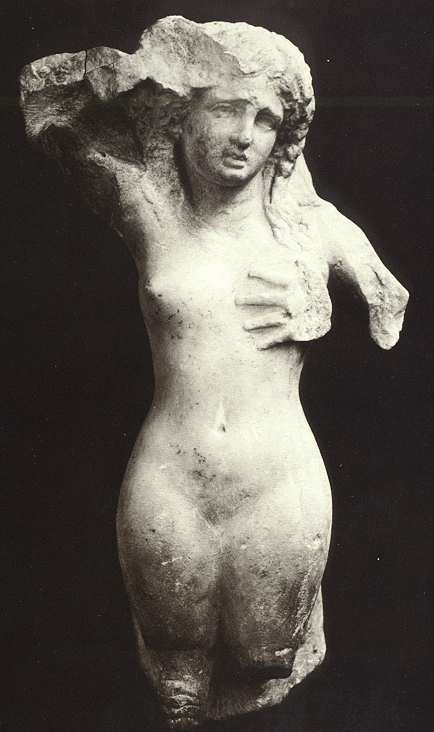
History
Earliest Reference
The earliest surviving mention of Lilith’s name appears in Gilgamesh and the Huluppu-Tree, a Sumerian epic poem found on a tablet at Ur (modern Iraq), carbon dated from approximate[/img]ly 2000 B.C. The fearsome ruler Gilgamesh, most probably the planet’s first literary blockbuster hero; is described as boldly slaying monsters and vainly searching for the secret of eternal (Aren’t we all!). In one of his epics, ‘after heaven and earth had separated and man had been created,’ Gilgamesh hurries to help Inanna, goddess of erotic love and war out of a dangerous predicament. Inanna lovingly tends a willow (huluppu) tree, in her garden near the Euphrates River, she hopes to craft the wood from this tree into a throne and bed for her own use. Inanna’s plans are suddenly close to being thwarted, however, when a triumvirate of wicked villains take possession of her tree. According to scholarly translation, one of the miscreants is Lilith: ‘Inanna, to her chagrin, found herself unable to realize her hopes. For in the meantime a dragon had set up its nest at the base of the tree, the Zu-bird had placed his young in its crown, and in its midst the demoness Lilith had built her house.’ However, wearing heavy armour, Gilgamesh, whose courage is above reproach, kills the dragon, driving the Zu-bird away to fly to nest in the mountains and a terrified Lilith to flee battered ‘to the desert.’
Biblical
The Book of Isaiah is an anthology of Hebrew prophecy covering many years; the first 39 chapters, often referred to as ‘First Isaiah,’ were probably of the time when the prophet actually lived (circa 742–701 B.C.E.). Throughout the book, the prophet exhorts God’s people to steer clear of involvement with foreigners who worship pagan deities. In Chapter 34 itself, a sword-branding Yahweh, firmly intent on violence pursues vengeance over the infidel Edomites, perennial non-conformists and foes of the ancient Israelites. According to what is a powerful apocalyptic poem, most unpleasant toward fellow humans, Edom will become a chaotic, desert land where the soil is infertile and wild animals roam: ‘Wildcats shall meet hyenas, Goat-demons shall greet each other; There too the lilith shall repose, And find herself a resting place” (Isaiah 34:14). Remarkably the Lilith demon’s identity appeared to be so well known to Isaiah’s audience that additional detail was deemed necessary.
Talmudic references
While Talmudic references to Lilith are few, they do provide a snapshot of what intellectuals thought about her. The Talmud’s version of Lilith recalls older Babylonian images, where she has ‘long hair’ (Erubin 100b) and wings (Niddah 24b). The Talmud’s image of Lilith undoubtedly reinforces the older interpretations of her character as a succubus, a demon in female form who performed flower with men while the men were sleeping, most probably dreaming. Unwholesome sexual practices are also linked to Lilith as a result of her powerful embodiment of the demon-lover myth.
Another talmudic reference encourages people not to sleep alone at night, lest Lilith slay them (Shabbath 151b). It also claims that during the 130-year period between the death of Abel and the birth of Seth, a distressed Adam separates himself from Eve. During this time he becomes the father of ‘ghosts and male demons and female [or night] demons’ (Erubin 18b). And those who try to construct the Tower of Babel are transformed into ‘apes, spirits, devils and night-demons’ (Sanhedrin 109a). The female night demon in the passage is Lilith.
The Alphabet of Ben Sira
Until the seventh century AD, Lilith was viewed as a dangerous creature, the embodiment of dark, feminine powers. However, in the Middle Ages, the Babylonian she-demon is invested with new and even more sinister characteristics. In the period prior to the year 1000, The Alphabet of Ben Sira was introduced to medieval Jewry. An anonymous text, The Alphabet contains 22 episodes, corresponding to the 22 letters of the Hebrew alphabet. But it is the fifth episode that includes a Lilith who would torment and terrify the population for generations to come. Looking at it logically, to some extent, The Alphabet of Ben Sira portrays a familiar Lilith: She is destructive, she can fly and she has a penchant for flower. Yet this story without warning adds a new twist: She suddenly becomes Adam’s first wife, before Eve, who boldly leaves Eden because she is treated as man’s inferior.
Lilith has maintained an earthly presence for around 4,000 years and during that period fired the mythological imaginations of endless writers, artists and poets. Her darker character originates in Babylonian demonology, a period when amulets and incantations were employed to counteract the sinister powers of the female winged spirit that preyed on pregnant women and infants, which became Lilith. Never once sinking into ignominy in a forgotten era, Lilith then worked her way into the world of the ancient Hittites, Egyptians, Israelites and Greeks. Interestingly enough, she only makes a single, yes a solitary one appearance in the Bible, as the wilderness demon eschewed by the prophet Isaiah. Nevertheless, in the Middle Ages she reappears in Jewish sources as Adam’s frightful first wife.
English translators of the poem encapsulated in Isaiah 34:14 were undoubtedly dubious about the depth of their average readers’ knowledge of Babylonian demonology, yet in reality history scholars were often more interested in that aspect, than the good book’s bread and butter contents. The King James Bible’s prose rendition of the poem translates ‘the lilith’ as ‘the screech owl,’ recalling the ominous bird-like qualities of the Babylonian she-demon. Nazheek, did indeed use the term ‘screech’ in his more recent observation within this unfolding chain which he adroitly kicked off.
The ancient name ‘Lilith’ is derived from a Sumerian word for female demons or wind spirits: the lilitu and the sociologically linked ardat lili. The lilitu dwells in desert lands and open country spaces and is especially dangerous to pregnant women and infants. Her breasts are legendarily filled with poison, not mother’s milk. The ardat lili is a sexually frustrated and infertile female who behaves aggressively toward young men.
In terms of the interpretation of writers, artists and poets: During the Renaissance, Michelangelo portrayed Lilith as a half-woman, half-serpent, coiled around the Tree of Knowledge. Later in the 19th century, her beauty would beguile English poet Dante Gabriel Rossetti, who wrote ‘Her enchanted hair, was the first gold.’ Whereas, Irish novelist James Augustine Aloysius Joyce took the more traditional view; casting her in the role of ‘patron of abortions.’
Meanwhile, modern feminists celebrate her bold struggle for independence from Adam. Her name features as the title of a Jewish women’s magazine and national literacy program. There is also an annual music festival that donates its profits to battered women’s shelters and breast cancer research institutes named the Lilith Fair.
Although in most manifestations of her mythology, Lilith represents chaos, seduction and ungodliness, yet she has made an indelible mark and cast a remarkable spell on humankind. Lilith - mythological seductress, heroine or murderer? For only in medieval Jewish tradition, did Lilith metamorphose into Adam’s first wife, before Eve, however what was befitting was in this remake of an ancient tale, when Adam insisted she play a subservient role, thus Lilith grew wings and flew away from Eden.
History
Earliest Reference
The earliest surviving mention of Lilith’s name appears in Gilgamesh and the Huluppu-Tree, a Sumerian epic poem found on a tablet at Ur (modern Iraq), carbon dated from approximate[/img]ly 2000 B.C. The fearsome ruler Gilgamesh, most probably the planet’s first literary blockbuster hero; is described as boldly slaying monsters and vainly searching for the secret of eternal (Aren’t we all!). In one of his epics, ‘after heaven and earth had separated and man had been created,’ Gilgamesh hurries to help Inanna, goddess of erotic love and war out of a dangerous predicament. Inanna lovingly tends a willow (huluppu) tree, in her garden near the Euphrates River, she hopes to craft the wood from this tree into a throne and bed for her own use. Inanna’s plans are suddenly close to being thwarted, however, when a triumvirate of wicked villains take possession of her tree. According to scholarly translation, one of the miscreants is Lilith: ‘Inanna, to her chagrin, found herself unable to realize her hopes. For in the meantime a dragon had set up its nest at the base of the tree, the Zu-bird had placed his young in its crown, and in its midst the demoness Lilith had built her house.’ However, wearing heavy armour, Gilgamesh, whose courage is above reproach, kills the dragon, driving the Zu-bird away to fly to nest in the mountains and a terrified Lilith to flee battered ‘to the desert.’
Biblical
The Book of Isaiah is an anthology of Hebrew prophecy covering many years; the first 39 chapters, often referred to as ‘First Isaiah,’ were probably of the time when the prophet actually lived (circa 742–701 B.C.E.). Throughout the book, the prophet exhorts God’s people to steer clear of involvement with foreigners who worship pagan deities. In Chapter 34 itself, a sword-branding Yahweh, firmly intent on violence pursues vengeance over the infidel Edomites, perennial non-conformists and foes of the ancient Israelites. According to what is a powerful apocalyptic poem, most unpleasant toward fellow humans, Edom will become a chaotic, desert land where the soil is infertile and wild animals roam: ‘Wildcats shall meet hyenas, Goat-demons shall greet each other; There too the lilith shall repose, And find herself a resting place” (Isaiah 34:14). Remarkably the Lilith demon’s identity appeared to be so well known to Isaiah’s audience that additional detail was deemed necessary.
Talmudic references
While Talmudic references to Lilith are few, they do provide a snapshot of what intellectuals thought about her. The Talmud’s version of Lilith recalls older Babylonian images, where she has ‘long hair’ (Erubin 100b) and wings (Niddah 24b). The Talmud’s image of Lilith undoubtedly reinforces the older interpretations of her character as a succubus, a demon in female form who performed flower with men while the men were sleeping, most probably dreaming. Unwholesome sexual practices are also linked to Lilith as a result of her powerful embodiment of the demon-lover myth.
Another talmudic reference encourages people not to sleep alone at night, lest Lilith slay them (Shabbath 151b). It also claims that during the 130-year period between the death of Abel and the birth of Seth, a distressed Adam separates himself from Eve. During this time he becomes the father of ‘ghosts and male demons and female [or night] demons’ (Erubin 18b). And those who try to construct the Tower of Babel are transformed into ‘apes, spirits, devils and night-demons’ (Sanhedrin 109a). The female night demon in the passage is Lilith.
The Alphabet of Ben Sira
Until the seventh century AD, Lilith was viewed as a dangerous creature, the embodiment of dark, feminine powers. However, in the Middle Ages, the Babylonian she-demon is invested with new and even more sinister characteristics. In the period prior to the year 1000, The Alphabet of Ben Sira was introduced to medieval Jewry. An anonymous text, The Alphabet contains 22 episodes, corresponding to the 22 letters of the Hebrew alphabet. But it is the fifth episode that includes a Lilith who would torment and terrify the population for generations to come. Looking at it logically, to some extent, The Alphabet of Ben Sira portrays a familiar Lilith: She is destructive, she can fly and she has a penchant for flower. Yet this story without warning adds a new twist: She suddenly becomes Adam’s first wife, before Eve, who boldly leaves Eden because she is treated as man’s inferior.
Re: How do you think YHVH is pronounced?
Last edited by hope on 27 May 2017 23:17, edited 3 times in total.
Who is online
Users browsing this forum: No registered users and 2 guests