Dear Nazheek,
In countries where the Celtic druidism spirit continues to burn strongly there remains a robust amalgam of pagan and Christian faiths. Redbeck
For example the Goddess Brigid in Ireland is merged with the Saint Brigid of Ireland.
Indeed Saint Brigid of Ireland (Also known as St Bridget of Kildare) is only one of many Irish Saints who have been associated with ancient Celtic Pagan Gods and Goddesses.
The Celtic Goddess Brigit (or Brigid, Bríg), whose name means 'exalted one', was of the Tuatha Dé Danann, the daughter of the Daghda and wife to Eochu Bres. She is associated with the season of spring along with fertility, healing, poetry and the blacksmith’s craft. Bridgid is also a Goddess of Fire, of the Sun and of the Hearth, closely connected to midwives and new-born babies. She is also credited with devising the ancient tradition of 'Keening', a form of wailing, weeping and singing, employed to this day in rural Ireland, especially at wakes and funerals.

Saint Brigid was born in Dundalk in 451 the daughter of a pagan Gaelic Chieftain named Dubtach (later anglicised as Duffy), and a Christian slave mother named Brocca (also known as Brocessa or Brocseach). Following a search for her mother, who had been sold and their return to Dubtach’s household, she discovered that her father had arranged her marriage to a poet, among the most prestigious men in that time. As Brigid had already vowed to remain celibate and dedicate herself to God's work, once again she left home, this time for good.
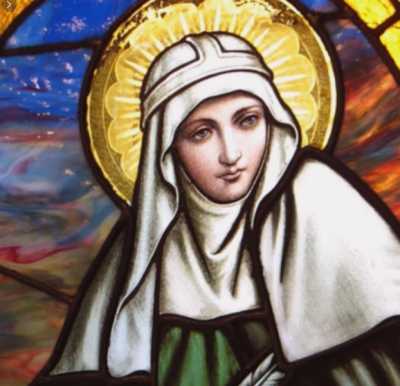
Together with seven dedicated women she formed the first ever female Monastic community in Ireland in the year 468. They constantly helped the surrounding poor with food and supplies; attributed with many miracles as a result. Brigid founded a school of Art and a Monastery at Cill Dara (meaning 'the Church of the Oak'), about which the modern town of Kildare now stands. It is thought this was the exact site upon which a shrine to a Celtic Pagan Goddess named Brigid had also stood. During this time the Abbess of Kildare was regarded as Superior General of the monasteries in Ireland, an incredibly lofty position for any woman to occupy in those days, although she was a close friend of Saint Patrick, described in detail in the ninth century 'Book of Armagh':
The Goddess Brigid was 'syncretized' with Saint Brigid during the Middle Ages. This was a process whereby the practices, beliefs and traditions of a Christian Saint were merged, blended and assimilated with an earlier often mythological character. It is no coincidence that both Brigid the actual Saint who lived in Kildare and Brigit the mythological Goddess of old Ireland are both associated with the coming of Spring.
Saint Brigid is celebrated on February 1st each year, the day and month of her death. It is this day that also happens to be the date of an annual Gaelic Pagan festival called 'Imbolc', marking the beginning of spring!
Imbolc, in the Celtic seasonal calendar marks the beginning of the lambing season and signals the beginning of spring and the stirrings of new life. It is Feile Brighde, the 'quickening of the year'. The original word Imbolg means 'in the belly'.
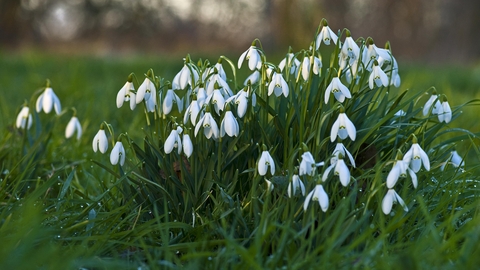
“Imbolc is traditionally the great festival and honouring of Brigid (Brighid, Bride, Brigit), so loved as a pagan Goddess that her worship was woven into the Christian church as St Bridgid. Decorate your altar with snowdrops, swan feathers, a Brigid Cross, a Bridey Doll, white and green candle. “

“Some of the symbols attributed to Brigid are:
The Snowdrop. The first gift of Spring in the bleakness of Winter.
The Swan. The swan mates for life and represents loyalty, fidelity and faithfulness. Swan feathers are a powerful amulet.
The Flame. Imbolc is a Fire Festival and fire of all kinds is associated with Brigid - the fire of creativity, the protective hearth fire, and her fire wheel - the Brigid Cross, which heralds her as a Sun Goddess.
Brigid's Cross. This is a traditional fire wheel symbol - found at the hearths of homes throughout Ireland and beyond as a symbol of protection. A customer in the shop recounted finding a hearth in Ireland, in recent years, adorned with over 200 Brigid Crosses - 200 years in the life of a hearth and a family, overlit and protected by Brigid.
Brigid Doll. A very old tradition involved the making of a Brigid doll which can be included in ceremony and/or placed in 'Bride's Bed' to bring fertility and good fortune to the home.
The Serpent. In Celtic mythology Brigid was associated with an awakening hibernating serpent which emerged from its lair at Imbolc. Traditionally serpents were associated with creativity and inspiration - the powerful Kundalini energy of the Eastern Mysteries. Paths of earth energy were called serpent paths and at Imbolc they are stirred from their slumber.
Sheep. Brigid's festival is at the beginning of lambing - eat ewe's milk cheese!
Imbolc Colours: White and silver for purity, green for the fresh burst of life.”
 “Herbs of Imbolc
Blackberry: Sacred to Brigid, the leaves and berries are used to attract prosperity and healing. A Goddess plant, belonging to the planetary sphere of Venus.
Coltsfoot: Coltsfoot or 'sponnc' (Gaelic) is a herb associated with Brigid. A herb of Venus, moves emotional and physical stagnation and is used magically to engender love and to bring peace.
Ginger: revitalises and stimulates the 'fire within' - helps alignment with the rise of Kundalini serpent energy at this time of year!”
“Trees of Imbolc
Rowan: Luis, or the Rowan, is the tree usually assigned to this time of year in the Celtic (Ogham) Tree Alphabet. It has long associations with the Maiden aspect of the Triple Goddess. It is also known as the 'Quickening Tree' and is associated with serpents. Traditionally it protects and wards of evil. A sprig of Rowan can be put near the door of your home (we have a whole tree), or a sprig worn for protection. Rowan berries have a tiny five-pointed star on the bottom reminiscent of the pentagram.
Willow: The fourth tree in the Celtic Tree alphabet - S Saille, is also long associated with the Maiden aspect of the Triple Goddess. Willow is the great 'shape shifter' of consciousness and emotion and symbolises feminine energy and the lunar cycle. Its branches are flexible - expressing movement and change rather than resistance. It is a tree of enchantment and dreaming, enhancing the confidence to follow one's intuition, and inspires leaps of imagination.”