I was recently quizzed by a female friend as to my constant use of the term beyond-organic in reference to agriculture. “Pretentious moi, mais non!”, but given the tenaciously enquiring mind of said individual, no sun would have shone on my back door that day without an essay-length explanation as opposed to a few well chosen highlights.
Indeed the question is massively important to the long term future of human kind and therefore which goes without saying to http://www.973-eht-namuh-973.com in its capacity of a vehicle for change. Without the revival of the fundamental eco-systemic substance that sustains the cultivation of planet Earth’s most nutritious foods and medicinal plants, as well as the maintenance of an eco- structure capable of sustaining long-term groundwater conservation then the battle against encroaching desertification is lost.
So what exactly is beyond-organic, a typical 21st Century agricultural tagline or one of the key components to that most serious of missions, saving the world. Well as they were want to observe in radio gardening programmes of the 1950s and 1960s, "the answer lies in the soil". And it truly does!
However, the more commonly used technical description of this crusade to save the underlying fabric of farming and market gardening at all points of the compass is Permaculture.
Humans have been farming organically for around11,900 years, yet that hasn’t prevented us from destroying the natural environment along the way. Losing tilled exposed topsoil year-on-year, felling great swathes of forest to make way for crop fields. Destroying the complex eco system nurtured beneath their leafy canopy and continually exposing the soil until it erodes stripping this natural growth force back to rock and clay, ultimately turning good crop bearing tracts into a barren wasteland
Organic only farming still applies a conventional agricultural model but does eliminate the use of chemical-based pesticides (widespread use post WWII onwards) and fertilisers (first introduced in the 19th Century). The process does however continue to involve ploughed fields and bare earth for a good part of the year, which still disrupts the soil’s established eco system on a seasonal basis. In effect there is a need to build a new eco-system following each growing cycle as good bacteria, beneficial micro-organisms, earthworm and other colonies are dispersed or even lost altogether. In essence organic farming is still taking more out of the soil than it puts back in although dismissing the use of chemicals that poison the above and enter the food chain.
The organic system also requires the consistent importation of large quantities animal and poultry generated faeces as manure in lieu of fertiliser along with the introduction of high nitrogen donor planting. Although both practices are common to both organic and permaculture, nitrogen planting while relatively easy in a smallholding vegetable environment is difficult to introduce effectively in wide open tilled bare earth spaces unless they are set aside purely for nitrogen induction by planting.
Permaculture also uses animals along with free range poultry as an integrated component of its methodology, manure is spread naturally on site and nitrogen bearing surface material trodden in. Occasionally trimmed down in the absence of livestock but without root-structure removal, natural ground cover is allowed to flourish.
Rotationally-grazed livestock are very much part of a complete eco-inclusive permaculture process. Sheep and Hens moved around the farm are responsible for producing on site manure, treading this and other ground cover debris back into ever more fertile, yet securely root-bound topsoil. In turn better able to retain moisture but being constantly worked by foraging livestock and virtually ready to sow seed. Ecosystem built soil, for example that found in the Amazon basin or the Indonesian rain forest, has the power to retain and conserves 100 times more water than all the water bodies in the world.
As an example of the changing thought process, it was originally thought that by trampling fields or clearings Elephant herds in Africa were destroying the environment, when they were doing exactly the opposite in terms of creating a soil quality that would deliver much greater crop yields. Huge unnecessary elephant culls resulted before enlightenment prevailed. Nevertheless, graze-rotation is important as overgrazing can have the same effect as excessive-tillage in terms of desertification
Returning to nitrogen appreciation, all grass crops such as corn, sorghum, wheat, forage grasses, etc. and non-leguminous broadleaf crops for example sunflowers, potatoes, sugar beets, cotton, etc. are not colonised by nitrogen fixing bacteria and therefore must obtain the nitrogen they need from the soil. Therefore by introducing nitrogen bearing species also acting as ground cover inter mingled with crops of this type, a permanently cultured as well as cultivated, steadily deepening strata of topsoil is created held in place by root structures rather than being exposed. Especially relevant in hot climates
In essence, Permaculture seeks to build a permanent undisturbed functional ecosystem by closing the loop, in effect healing the soil. Allowing natural leaf fall as well as pruning residue to either ground compost or be converted to bio-char and return nutrients to the soil, intermingling high-nitrogen donor rooted along with pest repellent species between crop bearing plant and tree lines, application of bio-char, are all remedial actions designed to ameliorate and rebalance the eco-equilibrium of the soil.
Other integral permaculture techniques include planting high pole wood crop and bio-char material feeder trees, like Italian Alder as windbreaks to further counter top-soil erosion, they too become part of the ecosystem. High turnaround coppiced White Mulberry trees, grow quickly producing consistent bio-char feed, anchor unstable pre eco-restored topsoil and provide impressive shade in hot sun-belt climates.
Natural pest deterrents are always in use, taking an Olive farm as an example, not exactly Delia Smith but here goes, “Suspend an old plastic milk bottle punched with a few holes from an inner branch of your Olive tree, half fill with mature urine then add a fresh Sardine.” Olive flies are attracted to the combination of naturally occurring aromatherapy and protein, but do not ruin the young Olive fruit by boring into it to lay their eggs, thus diverting the nutrients bound for olive growth to support the voracious developing larvae. There are multiple recipes from all parts of the world, far too numerous to list at least in this format and many of them involve human urine, which is incidentally also high in nitrogen.
Basically beyond-organic or permaculture farming is a method devoted to restoring the soil to a cycle of natural enrichment equitable to that found on the forest floor. It is not a massively profitable profession but is among the most honourable, helping restore at least some of the resources on our planet, including the reversal of desertification, and hopefully create a better brighter future for future generations. Above all providing humankind with edible crops that are delicious, wholesome and which could be equally abundant as those produced by soil destructive chemical dependent factory agriculture. Non-carcinogenic and infinitely sustainable produce to boot, so slowly but surely more and more areas of agricultural land will come under this style of holistic management.
Were we all to help expand a permaculture farm for but a few days a year, we would undoubtedly be refurbishing our planet toward a far better physically conditioned future.
Follow the link below for a small farm that already has this land and agricultural practice refurbishment ideology firmly in action:
Save Our Soil
-
1337cshacker
- Posts: 28
- Joined: 19 Jul 2015 06:16
- Contact:
Re: Save Our Soil
Most of our air, 80+%, comes from the algae in the ocean. Rain forest completely mowed down? A minimal problem/effect on earth.
Resist Monsanto. GMO Engineering. This is evil. It hurts our biology. Not even that matters anymore though. Enough damage has been done, that our children children will be already done for. Genetically. They've won that battle. They've killed what we were.
Resist Monsanto. GMO Engineering. This is evil. It hurts our biology. Not even that matters anymore though. Enough damage has been done, that our children children will be already done for. Genetically. They've won that battle. They've killed what we were.
-
Redbeck
- Site Admin
- Posts: 2147
- Joined: 19 Dec 2010 15:42
- Location: The Rookery, 3rd Horse Chestnut along, St Johns, Britain. Teacher leave our nuts alone!
- Contact:
Re: Save Our Soil
Indeed, indeed 1337chshacker is absolutely correct! You should join the righteous fight against Monsanto, the gigantic global prince of biotech darkness, millions of protesters ''March Against Monsanto" each May in 436 cities located in 52 countries across the world from Barcelona to Manitoba. I can only direct you to the article below that you may grasp the full scale of food chain evil and damage to human kind perpetrated in the interests of profit by just one of the organisation's arch enemy products:-
http://articles.mercola.com/sites/artic ... icide.aspx
http://articles.mercola.com/sites/artic ... icide.aspx
Re: Save Our Soil
How informative post! Thank you very much for this great share. You know dear I have also been thinking to start using organic pest management services as there are no health issues with the organic products. I would definitely talk to an organic pest control team [My apologies, but as this is an entirely knowledge-based site with no association with for-profit organisations, we therefore do not permit links to obviously commercial companies and the policy is to consistently remove these. Kind Regards Moderator] regarding this.
-
Redbeck
- Site Admin
- Posts: 2147
- Joined: 19 Dec 2010 15:42
- Location: The Rookery, 3rd Horse Chestnut along, St Johns, Britain. Teacher leave our nuts alone!
- Contact:
Re: Save Our Soil
While I am not an advocate in any way of single ownership and the enclosure of vast tracts of land which in any way precludes that freedom to walk the earth afforded to our hunter gatherer forebears, I do believe there is merit in glasnost ownership exhibiting a holistic determination to restore the natural order of ecosystems, by striving for the very best balance of self-enriching soil, forest, water and returning wildlife. The Alladale Estate in Sutherland, Scotland is a good example where this approach will be to the ultimate benefit of human kind.
At Alladale, the peatlands are being rewetted, returning them to functioning carbon sinks, removing significant tranches of carbon dioxide from the atmosphere. A trial reintroduction of Moose and wild boar is work-in-progress, there is a wild cat breeding programme ongoing and plans to restore that original and long term denizen of Scottish lands, the wolf. All creatures inclined to tread in the soil enriching enriching organic decay of the forest floor.
There are now bright green swathes on the valley sides made up of newly planted saplings, 800,000 infant trees have been bedded in since the current owner took over the land.
At 28,000 acres, Alladale encompasses two valleys, Glen Alladale and Glen Mor. From the summit of the highest peak, Meall nam Fuaran, at 674 metres (2,211feet), the sea is clearly visible in both directions.
In Glen Feshie, there stand Scots Pines more than 300 years old, certainly in their early years more than likely to have been marked by the then resident wolf packs that roamed freely through upland and treeline .
The Alladale way forward consists of a truly laudable series of ideas in action.

At Alladale, the peatlands are being rewetted, returning them to functioning carbon sinks, removing significant tranches of carbon dioxide from the atmosphere. A trial reintroduction of Moose and wild boar is work-in-progress, there is a wild cat breeding programme ongoing and plans to restore that original and long term denizen of Scottish lands, the wolf. All creatures inclined to tread in the soil enriching enriching organic decay of the forest floor.
There are now bright green swathes on the valley sides made up of newly planted saplings, 800,000 infant trees have been bedded in since the current owner took over the land.
At 28,000 acres, Alladale encompasses two valleys, Glen Alladale and Glen Mor. From the summit of the highest peak, Meall nam Fuaran, at 674 metres (2,211feet), the sea is clearly visible in both directions.
In Glen Feshie, there stand Scots Pines more than 300 years old, certainly in their early years more than likely to have been marked by the then resident wolf packs that roamed freely through upland and treeline .
The Alladale way forward consists of a truly laudable series of ideas in action.
-
Redbeck
- Site Admin
- Posts: 2147
- Joined: 19 Dec 2010 15:42
- Location: The Rookery, 3rd Horse Chestnut along, St Johns, Britain. Teacher leave our nuts alone!
- Contact:
Re: Save Our Soil
It is of immense help to the permaculture farmer’s mission in life when wildlife drops in, deposits a pile steaming or otherwise, which inevitably cycles nutrients through the site.
Endangered species can exert a knock-on effect to the beyond-organic farmer’s ecosystem. Birds for instance provide the ultimate natural phosphorus transport system and the demise or indeed the significant numeric depletion of any species inevitably has a serious territorial impact on the soil quality.
To cite an example of high impact avian extinction: Once upon a time, there were between 3 and 5 billion passenger pigeons alive and well in the forested regions of eastern North America. Each pigeon produced an annual contribution of some 11.5 kilograms (around 25.4 lbs) of guano. That adds up to an enormous volume of high quality faeces. The passenger pigeon population would deposit between 2.8 and 6.9 billion kilograms (6.2 to 15.2 billion lbs) of phosphoric acid each year, along between 3.8 and 9.2 billion kilograms (8.4 to 20.3 billion lbs) of nitrogen each year.
Yet sadly the species dwindled from one of the most abundant birds in the world during the 19th century to extinction early in the 20th century. Pigeon meat became the mainstream cheap food source for the enslaved and extremely poor, a demand which resulted in hunting on a massive and mechanised scale. A slow decline in the passenger pigeon population from roughly 1800 to 1870 was then followed by a period of virtual decimation between 1870 and 1890. The last surviving member of the species died in captivity in 1914. A truly disastrous loss of phosphoric acid and nitrogen nutrition for the topsoil crucial to life on our planet.
It is vital that we reintroduce and protect former indigenous species assuming they are not extinct. In this case, I have referred to birds but obviously terrestrial creatures: herbivore, omnivore or carnivore all equally welcome. Note the reference in my earlier post regarding the progress at the Alladale Estate in Sutherland, Scotland, “…the trial reintroduction of Moose and Wild Boar is work-in-progress, there is also a wild cat breeding programme and a plan to restore the Wolf”. However, given that, it is also important to try and restore the natural habitat in parallel, as in replanting the tree line which is also happening on a grand scale at Alladale. Multiple benefits to the latter of course: thwarting wind assisted topsoil erosion as well as encouraging wildlife resettlement with increasing privacy.
Endangered species can exert a knock-on effect to the beyond-organic farmer’s ecosystem. Birds for instance provide the ultimate natural phosphorus transport system and the demise or indeed the significant numeric depletion of any species inevitably has a serious territorial impact on the soil quality.
To cite an example of high impact avian extinction: Once upon a time, there were between 3 and 5 billion passenger pigeons alive and well in the forested regions of eastern North America. Each pigeon produced an annual contribution of some 11.5 kilograms (around 25.4 lbs) of guano. That adds up to an enormous volume of high quality faeces. The passenger pigeon population would deposit between 2.8 and 6.9 billion kilograms (6.2 to 15.2 billion lbs) of phosphoric acid each year, along between 3.8 and 9.2 billion kilograms (8.4 to 20.3 billion lbs) of nitrogen each year.
Yet sadly the species dwindled from one of the most abundant birds in the world during the 19th century to extinction early in the 20th century. Pigeon meat became the mainstream cheap food source for the enslaved and extremely poor, a demand which resulted in hunting on a massive and mechanised scale. A slow decline in the passenger pigeon population from roughly 1800 to 1870 was then followed by a period of virtual decimation between 1870 and 1890. The last surviving member of the species died in captivity in 1914. A truly disastrous loss of phosphoric acid and nitrogen nutrition for the topsoil crucial to life on our planet.
It is vital that we reintroduce and protect former indigenous species assuming they are not extinct. In this case, I have referred to birds but obviously terrestrial creatures: herbivore, omnivore or carnivore all equally welcome. Note the reference in my earlier post regarding the progress at the Alladale Estate in Sutherland, Scotland, “…the trial reintroduction of Moose and Wild Boar is work-in-progress, there is also a wild cat breeding programme and a plan to restore the Wolf”. However, given that, it is also important to try and restore the natural habitat in parallel, as in replanting the tree line which is also happening on a grand scale at Alladale. Multiple benefits to the latter of course: thwarting wind assisted topsoil erosion as well as encouraging wildlife resettlement with increasing privacy.
-
1337cshacker
- Posts: 28
- Joined: 19 Jul 2015 06:16
- Contact:
Re: Save Our Soil
Going to quote Jeff Goldblum.
Life will find a way.
Life will find a way.
-
Redbeck
- Site Admin
- Posts: 2147
- Joined: 19 Dec 2010 15:42
- Location: The Rookery, 3rd Horse Chestnut along, St Johns, Britain. Teacher leave our nuts alone!
- Contact:
Re: Save Our Soil
Greetings as we proceed onward and upward with the initiative to save our soil, in this instance recognising the value of bio-char as a soil amendment.
What exactly is biochar? Essentially this is a 2,000 year-old practice that converts agricultural waste into a soil enhancer able to hold carbon, a vehicle via which to boost food security and upgrade soil biodiversity, as well as discourage deforestation. Fundamentally the process produces a fine-grained, exceptionally porous charcoal that helps soils retain nutrients and water.
The process began thousands of years ago in the Amazon Basin, where islands of rich, fertile soils known as terra preta ("dark earth") were created by indigenous people. Anthropologists believe that a combination cooking fires and kitchen refuse middens, along with deliberate placing of charcoal in the ground resulted in soils with high fertility and carbon content, often containing fragments of broken pottery. Amazingly these soils continue to "hold" carbon to this day and have stayed so nutrient rich that they have even been dug up and sold as potting compost in Brazilian markets.
At the risk of non-text book literary repetition:-
Biochar is found in soils across the world as a result of vegetation fires and historic soil management practices. The intensive study of biochar-rich dark earths in the Amazon (terra preta), has in turn resulted in a wider appreciation of biochar’s unique properties as a soil enhancer.
Biochar use is steadily returning to favour as an important tool in the battle to increase food security and cropland diversity in areas suffering from severely depleted soils, scarce organic resources, and inadequate water and chemical fertilizer supplies.
Biochar is also proven to improve water quality and quantity by increasing soil retention of nutrients for plant and crop utilisation. Effectively more nutrients remain in the soil rather than leaching into groundwater and causing pollution.
What we have at our disposal a simple yet powerful tool to combat climate change. The carbon in biochar resists degradation and can hold carbon in soils for up to a millennium. Produced through pyrolysis or gasification, both processes that heat biomass in the absence of or significantly reduced oxygen.
Biochar and bioenergy co-production can help combat global climate change by displacing fossil fuel use reducing carbon emissions and by impounding carbon in stable soil carbon pools, potentially also reducing emissions of nitrous oxide.
In terms of the technology behind biochar, there are numerous different ways to make biochar, but all of them involve heating biomass with little or no oxygen to drive off volatile gasses, leaving carbon behind. This simple process is termed thermal decomposition usually from pyrolysis or gasification and is relatively inexpensive, widely implementable and rapidly scaled.
The feedstock for.all biochar production processes is cellulosic biomass such as wood chips, corn stover, rice and peanut hulls, tree bark, paper mill sludge, animal manure and most urban, agricultural and forestry bio-mass residues such as pruning output. Low-cost, small-scale biochar production units can be built to increase garden, agricultural and forest productivity, with the beneficial side-effect of the release of thermal energy for the purposes of cooking and drying grain.
Certainly biochar enhances soils, converting agricultural waste into a powerful soil enhancer that holds carbon and makes soils more fertile, enabling us to reinforce food security, deter deforestation and preserve cropland diversity. Research is now yielding results which confirm benefits that include: Reduced leaching of nitrogen into ground water, potential reduced emissions of nitrous oxide, increased cation-exchange capacity resulting in improved soil fertility, moderation of soil acidity, significantly improved water retention and increased volumes of beneficial soil microbes.
Follow the link below for a small farm that already has the biochar ideology firmly in action:
What exactly is biochar? Essentially this is a 2,000 year-old practice that converts agricultural waste into a soil enhancer able to hold carbon, a vehicle via which to boost food security and upgrade soil biodiversity, as well as discourage deforestation. Fundamentally the process produces a fine-grained, exceptionally porous charcoal that helps soils retain nutrients and water.
The process began thousands of years ago in the Amazon Basin, where islands of rich, fertile soils known as terra preta ("dark earth") were created by indigenous people. Anthropologists believe that a combination cooking fires and kitchen refuse middens, along with deliberate placing of charcoal in the ground resulted in soils with high fertility and carbon content, often containing fragments of broken pottery. Amazingly these soils continue to "hold" carbon to this day and have stayed so nutrient rich that they have even been dug up and sold as potting compost in Brazilian markets.
At the risk of non-text book literary repetition:-
Biochar is found in soils across the world as a result of vegetation fires and historic soil management practices. The intensive study of biochar-rich dark earths in the Amazon (terra preta), has in turn resulted in a wider appreciation of biochar’s unique properties as a soil enhancer.
Biochar use is steadily returning to favour as an important tool in the battle to increase food security and cropland diversity in areas suffering from severely depleted soils, scarce organic resources, and inadequate water and chemical fertilizer supplies.
Biochar is also proven to improve water quality and quantity by increasing soil retention of nutrients for plant and crop utilisation. Effectively more nutrients remain in the soil rather than leaching into groundwater and causing pollution.
What we have at our disposal a simple yet powerful tool to combat climate change. The carbon in biochar resists degradation and can hold carbon in soils for up to a millennium. Produced through pyrolysis or gasification, both processes that heat biomass in the absence of or significantly reduced oxygen.
Biochar and bioenergy co-production can help combat global climate change by displacing fossil fuel use reducing carbon emissions and by impounding carbon in stable soil carbon pools, potentially also reducing emissions of nitrous oxide.
In terms of the technology behind biochar, there are numerous different ways to make biochar, but all of them involve heating biomass with little or no oxygen to drive off volatile gasses, leaving carbon behind. This simple process is termed thermal decomposition usually from pyrolysis or gasification and is relatively inexpensive, widely implementable and rapidly scaled.
The feedstock for.all biochar production processes is cellulosic biomass such as wood chips, corn stover, rice and peanut hulls, tree bark, paper mill sludge, animal manure and most urban, agricultural and forestry bio-mass residues such as pruning output. Low-cost, small-scale biochar production units can be built to increase garden, agricultural and forest productivity, with the beneficial side-effect of the release of thermal energy for the purposes of cooking and drying grain.
Certainly biochar enhances soils, converting agricultural waste into a powerful soil enhancer that holds carbon and makes soils more fertile, enabling us to reinforce food security, deter deforestation and preserve cropland diversity. Research is now yielding results which confirm benefits that include: Reduced leaching of nitrogen into ground water, potential reduced emissions of nitrous oxide, increased cation-exchange capacity resulting in improved soil fertility, moderation of soil acidity, significantly improved water retention and increased volumes of beneficial soil microbes.
Follow the link below for a small farm that already has the biochar ideology firmly in action:
-
Redbeck
- Site Admin
- Posts: 2147
- Joined: 19 Dec 2010 15:42
- Location: The Rookery, 3rd Horse Chestnut along, St Johns, Britain. Teacher leave our nuts alone!
- Contact:
Re: Save Our Soil
Another interesting aspect of the permaculture or beyond organic farming to bring human kind back to the land even in a relatively small way and which can help reverse the effects of the punishingly rapacious excesses already meted out to our planet, is changing the way grazing animals are managed which can undoubtedly ameliorate the condition of the land. More considered management of livestock is almost certain to improve soil health as well as pasture condition.
Every piece of land has a unique mix of soils, forages and water resources, therefore no two grazing systems will be alike. For example an intensive grazing system involving frequent and rapid rotation of pastures does not really fit a busy family with young children involved in other activities, unless the intention is to divide a larger area of land into fenced off miniature pastures.
It is important to determine soil types and forage types across the stretch of land involved as well as establish any conservation concerns up front, these elements are essential to the design of any grazing plan, which naturally embraces fencing and watering systems design. Adopting the miniature-plot system may mean extra fencing and water distribution components given there is an existing crop irrigation network, for elevated piping systems installed used for watering Olive, Almond Trees, Citrus and soft fruit trees.
Making a full blown pasture inventory is an essential activity within any planning process. This should take account of ‘bare-ground’ type gaps in forage availability or seasonal gaps left as a result of existing occurrence of ‘cool-season ‘ forage only, also what else is growing besides grasses, i.e. leguminous plants such as clover and alfalfa along with the accurate identification of broadleaf weed covered and brushy areas.
Diversity of forages is highly beneficial to both livestock and soil enrichment: allowing extension of the grazing system, (ideally both cool- and warm-season forage varieties should be planted) which provides preferred forages to several species of livestock i.e. sheep, goats and donkeys in turn improving the all-year-round intake and health of livestock, but equally importantly lifting soil health in terms of greater nitrogen fixed tread-down and the presence of increased levels of organic matter.
Good examples of all-season forage coverage include: Tall Fescue and Clover in Spring, Vetch in late Spring, Bermuda Grass and Johnson Grass Sorghum in Summer, allowing Fescue re-growth in Autumn, supplemented by clover, broadleaved weeds also a sound basis on which to a develop a seeding plan for changes of forage species composition to address shortfalls. Sample ideas: allowing some plots to self-seed only without being grazed for one year to lift thin forage density, over graze other plots to enable easier seeding of the introduction of a spread of cool- and warm seasonal growth.
Small holdings make ideal test beds for this type of assessment and seasonal balancing exercise for nitrogen bearing animal forage, letting four-legged friends do the rest.
Follow the link below for a small farm that already has the forage mixed-season-spread forage plan firmly in action:
Every piece of land has a unique mix of soils, forages and water resources, therefore no two grazing systems will be alike. For example an intensive grazing system involving frequent and rapid rotation of pastures does not really fit a busy family with young children involved in other activities, unless the intention is to divide a larger area of land into fenced off miniature pastures.
It is important to determine soil types and forage types across the stretch of land involved as well as establish any conservation concerns up front, these elements are essential to the design of any grazing plan, which naturally embraces fencing and watering systems design. Adopting the miniature-plot system may mean extra fencing and water distribution components given there is an existing crop irrigation network, for elevated piping systems installed used for watering Olive, Almond Trees, Citrus and soft fruit trees.
Making a full blown pasture inventory is an essential activity within any planning process. This should take account of ‘bare-ground’ type gaps in forage availability or seasonal gaps left as a result of existing occurrence of ‘cool-season ‘ forage only, also what else is growing besides grasses, i.e. leguminous plants such as clover and alfalfa along with the accurate identification of broadleaf weed covered and brushy areas.
Diversity of forages is highly beneficial to both livestock and soil enrichment: allowing extension of the grazing system, (ideally both cool- and warm-season forage varieties should be planted) which provides preferred forages to several species of livestock i.e. sheep, goats and donkeys in turn improving the all-year-round intake and health of livestock, but equally importantly lifting soil health in terms of greater nitrogen fixed tread-down and the presence of increased levels of organic matter.
Good examples of all-season forage coverage include: Tall Fescue and Clover in Spring, Vetch in late Spring, Bermuda Grass and Johnson Grass Sorghum in Summer, allowing Fescue re-growth in Autumn, supplemented by clover, broadleaved weeds also a sound basis on which to a develop a seeding plan for changes of forage species composition to address shortfalls. Sample ideas: allowing some plots to self-seed only without being grazed for one year to lift thin forage density, over graze other plots to enable easier seeding of the introduction of a spread of cool- and warm seasonal growth.
Small holdings make ideal test beds for this type of assessment and seasonal balancing exercise for nitrogen bearing animal forage, letting four-legged friends do the rest.
Follow the link below for a small farm that already has the forage mixed-season-spread forage plan firmly in action:
-
Redbeck
- Site Admin
- Posts: 2147
- Joined: 19 Dec 2010 15:42
- Location: The Rookery, 3rd Horse Chestnut along, St Johns, Britain. Teacher leave our nuts alone!
- Contact:
Re: Save Our Soil
Good afternoon to you all, an adjunct to my last post in the 'Save Our Soil' chain, if I may:
That venerable founder of http://www.973-eht-namuh-973.com, the Oracle forum and all who sail with her, and of course, all round gentleman of creativity and scholarly love, David Denison, incisive as ever has pointed out that the word 'Permaculture' epitomises the fundamental pattern bearing wall of alphanumeric transposition that remain such key thought provoking pistons in driving this juggernaut of knowledge forward and upward.
The power number in our system is 9, endowed with the force that resides behind both the good and evil actions and activities forming the root system of our tree of life.
Follow the images below for a small farm that is already applying the power of nines in its mission to enrich the earth and its natural bounty to human kind:
That venerable founder of http://www.973-eht-namuh-973.com, the Oracle forum and all who sail with her, and of course, all round gentleman of creativity and scholarly love, David Denison, incisive as ever has pointed out that the word 'Permaculture' epitomises the fundamental pattern bearing wall of alphanumeric transposition that remain such key thought provoking pistons in driving this juggernaut of knowledge forward and upward.
The power number in our system is 9, endowed with the force that resides behind both the good and evil actions and activities forming the root system of our tree of life.
Follow the images below for a small farm that is already applying the power of nines in its mission to enrich the earth and its natural bounty to human kind:
-
Redbeck
- Site Admin
- Posts: 2147
- Joined: 19 Dec 2010 15:42
- Location: The Rookery, 3rd Horse Chestnut along, St Johns, Britain. Teacher leave our nuts alone!
- Contact:
Re: Save Our Soil
As the seasons roll round, this is one of the ways in which we’re hoping to transform the natural world into a better place. The living proof of a vigorous battle against desertification which has reaped truly exceptional results in terms of increased and infinitely healthier food crop production; a both practical and spiritual agrarian crusade.
“Getting some really good second year growth on the nitrogen fixers and other beneficial perennials we've sown. We're scything now in anticipation of more rain this week and another burst of growth [at Finca Slow, Ginestar Catalunya Spain].”
Just over two years ago:
Back end of April 2016:
Follow the link below for news of a small farm that is already applying the permaculture power of nines in its mission to enrich the earth and its natural bounty to human kind:
“Getting some really good second year growth on the nitrogen fixers and other beneficial perennials we've sown. We're scything now in anticipation of more rain this week and another burst of growth [at Finca Slow, Ginestar Catalunya Spain].”
Just over two years ago:
Back end of April 2016:
-
Redbeck
- Site Admin
- Posts: 2147
- Joined: 19 Dec 2010 15:42
- Location: The Rookery, 3rd Horse Chestnut along, St Johns, Britain. Teacher leave our nuts alone!
- Contact:
Re: Save Our Soil
A November note from Catalonia
Good evening,
Just a few scraps of exchange between interested agricultural parties, we are of course all trying to save this world of ours from extinction. In this case the answer resides in steadily improving soil and an ever extending bastion against desertification as they fight the 'good-earth, better-life' fight over at Finca Slow, south of Tarragona, up above the River Ebre on the Sierra de Tivissa. Detailed news of natural progress in the the resistance movement against rapacious, draining, capitalistic techno-farming is always available from website fincaslow.org/news of course.
Anyway back to the scraps, an observation coupled with a question, one might say. It is however the last sentence of the reply that says it all in terms of the technicalities behind saving both the planet and the human race.
'Well done all, that is just beautiful to see, what's the final overall projected harvest weight projection, do you reckon? It'll no doubt be a great 'yield' stat in support of permacultural farming methods by comparison with a year one based on scraped earth with no ground cover and trodden in soil nutrients, along with preseason chemical fertilisers and pesticides'
'Don't know end harvest totals as only about half way through. So far 2000kg picked and heading to the mill tomorrow with what looks like about another 700kg and then about 50 more trees. It's a good year but it's not always about increasing yield with Permaculture, but overall system health and diversity. So we have extra yields coming from the land that might mean a total yield of diverse produce adding up to lots more than just olives.'
In other words this is working toward being able to totally supply your family nutrition wants in terms of fruit, vegetables and nuts from the same steadily enriching parcel of land that was previously almost squandered by its dedications to olives and almonds. The time to take action is now of course.
The Redbeck
Good evening,
Just a few scraps of exchange between interested agricultural parties, we are of course all trying to save this world of ours from extinction. In this case the answer resides in steadily improving soil and an ever extending bastion against desertification as they fight the 'good-earth, better-life' fight over at Finca Slow, south of Tarragona, up above the River Ebre on the Sierra de Tivissa. Detailed news of natural progress in the the resistance movement against rapacious, draining, capitalistic techno-farming is always available from website fincaslow.org/news of course.
Anyway back to the scraps, an observation coupled with a question, one might say. It is however the last sentence of the reply that says it all in terms of the technicalities behind saving both the planet and the human race.
'Well done all, that is just beautiful to see, what's the final overall projected harvest weight projection, do you reckon? It'll no doubt be a great 'yield' stat in support of permacultural farming methods by comparison with a year one based on scraped earth with no ground cover and trodden in soil nutrients, along with preseason chemical fertilisers and pesticides'
'Don't know end harvest totals as only about half way through. So far 2000kg picked and heading to the mill tomorrow with what looks like about another 700kg and then about 50 more trees. It's a good year but it's not always about increasing yield with Permaculture, but overall system health and diversity. So we have extra yields coming from the land that might mean a total yield of diverse produce adding up to lots more than just olives.'
In other words this is working toward being able to totally supply your family nutrition wants in terms of fruit, vegetables and nuts from the same steadily enriching parcel of land that was previously almost squandered by its dedications to olives and almonds. The time to take action is now of course.
The Redbeck
-
Redbeck
- Site Admin
- Posts: 2147
- Joined: 19 Dec 2010 15:42
- Location: The Rookery, 3rd Horse Chestnut along, St Johns, Britain. Teacher leave our nuts alone!
- Contact:
Re: Save Our Soil
The three ethical principles that underpin permaculture and all it strives to achieve.
Care of the earth, Care of People, and Share the Surplus.
The application of these three ethics can undoubtedly inform our cultivation strategies, our agrarian centric communities and our human community as a whole for the better.
But most important of all, these ethics could well be the key to making our societies more harmonious, less vicious and infinitely more respectful of the natural world; the precious gift with which we have been entrusted.

Care of the earth, Care of People, and Share the Surplus.
The application of these three ethics can undoubtedly inform our cultivation strategies, our agrarian centric communities and our human community as a whole for the better.
But most important of all, these ethics could well be the key to making our societies more harmonious, less vicious and infinitely more respectful of the natural world; the precious gift with which we have been entrusted.
-
Redbeck
- Site Admin
- Posts: 2147
- Joined: 19 Dec 2010 15:42
- Location: The Rookery, 3rd Horse Chestnut along, St Johns, Britain. Teacher leave our nuts alone!
- Contact:
Re: Save Our Soil
More and more of us are resorting to homesteading, small holdings and allotments to grow vegetables, both to feed and in many cases across the planet keep our families alive. As I have said in this post and other threads, dwindling water supply and eco-system dead eroding topsoil represent two of the most dangerous obstacles to the longevity of humankind, the animal kingdom and plant life on our planet. Taking any small step at an individual level to protect and conserve either, can only contribute to the sustainability of life on Earth, which faces some daunting challenges and a titanic struggle as I write.

The Save or Soil thread is designed to spread the permaculture doctrine as far and as widely as possible as a solution to micro-farming for self preservation to the very edges of society. If you have access to any kind of garden, planting box, nearby piece of waste ground, or indeed if you are lucky enough to entry to a smallholding or allotment, cultivating that space is in the collective interest of humankind in terms of both contributing to the food supply and helping to regenerate the natural world around us, even the air that we breathe.
In order for this to be successful: soil must nurtured and reinvigorated naturally, to the extent where it not only supports abundant planted growth, but is consistently enriched and increased in depth during that process. Rendering it increasingly absorbent and retentive of water along with the building bricks of a vibrant well populated eco-system (worms, beetles, extensive root systems and as many soil positive microorganisms as possible). Enacting an expanding barrier to rapidly encroaching desertification, as well as aiding increased moisture capture from the atmosphere, along with physical rainfall, to replenish falling water tables and subterranean aquifers.
In achieving this, we also combat waste, as it is possible for us to make use of as much pertinent recyclable material as possible, especially by adopting a miraculous technique, well in terms of results, known as mulching.
Mulching is a practice that benefits your permaculture plot in many ways, which range from preservation of moisture, controlling weeds, and generating denser nutrient ratios, that in turn provide rich supplements for healthier crops. It also means that recycling becomes an integral element of working practice, for old denim clothes, food scraps, newspapers or old cardboard boxes can all be put to work in the process of mulching. Then by adding organic material from hay to horse manure, you can make your soil full of texture and it will then do a lot of the hard work for you!
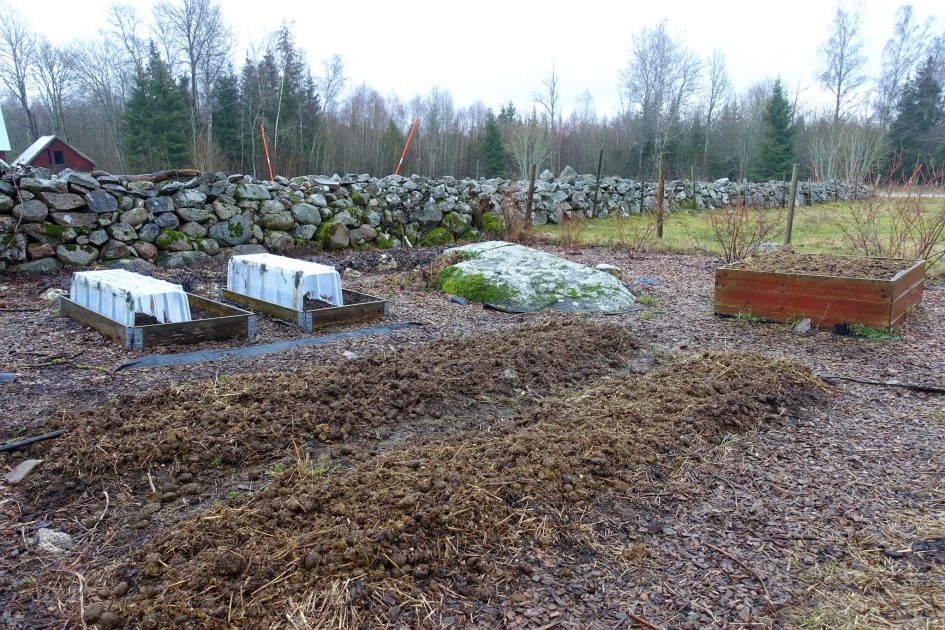
Permaculture Mulching refers to the covering of areas of soil with one or more layers of material. These layers are organic in nature, and the mulch benefits the soil in several ways. Firstly, it helps to preserve water content in the soil by protecting it from excessive evaporation, a massive plus in arid sun-belt climates. In addition, Mulch also improves the health and quality of the soil by creating a stable environment enabling bacteria and microorganisms to function, as well as through the nutrients in the mulch itself, which are slowly broken down and added to the soil. Mulch also adds organic matter to the soil when it is used to control weed growth and also for example when a crop is coming to the end of its lifecycle it can be left in the soil but covered in mulch, thereby starving it of light, so that it dies and rots into the soil returning essential Nitrogen and the equivalent of rich forest floor debris, to name but two.
A first step is to cut down any long grass and weeds. Leave the cut plants where they fall. They will add organic matter to the soil through the mulching process, then water thoroughly or with as much as can be spared. Once the remainder of the permaculture mulching layers are applied, this water simply will be encapsulated beneath the mulch.
Next gather as many sheets of cardboard, old carpet, newspapers or any other organic material, even old denim clothing that you have or can beg or borrow and spread them around the crop bearing vegetable plants, nut bushes or fruit trees. The key to success of the methodology is to have sufficient material to cover the area with the edges of each piece overlapping so no gaps are left.

This layer performs two functions: it prevents weeds growing (which is why the layers are best overlapping, so there is no slim exposed spaces in which weeds can become established) and also as this layer breaks down, it adds nutrients to the soil.
Thank you for helping to make the world a better place. Redbeck
The Save or Soil thread is designed to spread the permaculture doctrine as far and as widely as possible as a solution to micro-farming for self preservation to the very edges of society. If you have access to any kind of garden, planting box, nearby piece of waste ground, or indeed if you are lucky enough to entry to a smallholding or allotment, cultivating that space is in the collective interest of humankind in terms of both contributing to the food supply and helping to regenerate the natural world around us, even the air that we breathe.
In order for this to be successful: soil must nurtured and reinvigorated naturally, to the extent where it not only supports abundant planted growth, but is consistently enriched and increased in depth during that process. Rendering it increasingly absorbent and retentive of water along with the building bricks of a vibrant well populated eco-system (worms, beetles, extensive root systems and as many soil positive microorganisms as possible). Enacting an expanding barrier to rapidly encroaching desertification, as well as aiding increased moisture capture from the atmosphere, along with physical rainfall, to replenish falling water tables and subterranean aquifers.
In achieving this, we also combat waste, as it is possible for us to make use of as much pertinent recyclable material as possible, especially by adopting a miraculous technique, well in terms of results, known as mulching.
Mulching is a practice that benefits your permaculture plot in many ways, which range from preservation of moisture, controlling weeds, and generating denser nutrient ratios, that in turn provide rich supplements for healthier crops. It also means that recycling becomes an integral element of working practice, for old denim clothes, food scraps, newspapers or old cardboard boxes can all be put to work in the process of mulching. Then by adding organic material from hay to horse manure, you can make your soil full of texture and it will then do a lot of the hard work for you!
Permaculture Mulching refers to the covering of areas of soil with one or more layers of material. These layers are organic in nature, and the mulch benefits the soil in several ways. Firstly, it helps to preserve water content in the soil by protecting it from excessive evaporation, a massive plus in arid sun-belt climates. In addition, Mulch also improves the health and quality of the soil by creating a stable environment enabling bacteria and microorganisms to function, as well as through the nutrients in the mulch itself, which are slowly broken down and added to the soil. Mulch also adds organic matter to the soil when it is used to control weed growth and also for example when a crop is coming to the end of its lifecycle it can be left in the soil but covered in mulch, thereby starving it of light, so that it dies and rots into the soil returning essential Nitrogen and the equivalent of rich forest floor debris, to name but two.
A first step is to cut down any long grass and weeds. Leave the cut plants where they fall. They will add organic matter to the soil through the mulching process, then water thoroughly or with as much as can be spared. Once the remainder of the permaculture mulching layers are applied, this water simply will be encapsulated beneath the mulch.
Next gather as many sheets of cardboard, old carpet, newspapers or any other organic material, even old denim clothing that you have or can beg or borrow and spread them around the crop bearing vegetable plants, nut bushes or fruit trees. The key to success of the methodology is to have sufficient material to cover the area with the edges of each piece overlapping so no gaps are left.
This layer performs two functions: it prevents weeds growing (which is why the layers are best overlapping, so there is no slim exposed spaces in which weeds can become established) and also as this layer breaks down, it adds nutrients to the soil.
Thank you for helping to make the world a better place. Redbeck
-
Redbeck
- Site Admin
- Posts: 2147
- Joined: 19 Dec 2010 15:42
- Location: The Rookery, 3rd Horse Chestnut along, St Johns, Britain. Teacher leave our nuts alone!
- Contact:
Re: Save Our Soil
Greetings, tragically this topic can never rest on it's laurels otherwise that aromatic evergreen tree or large shrub with green, glabrous leaves, in the flowering plant family Lauraceae will cease to exist. And, 'O me miserum',' it's back to South America we go.
Colombia's Amazon has become a wild west for environmental destruction; criminal loggers and coca growers are swarming in and destroying everything in their path!
The Columbian government insists that this only amounts to small scale deforestation, but satellite image research shows a dramatically worsening situation.
It is therefore imperative that this secret attack on the Amazon is reined in for the sake of an eco-system that will be on death row unable to photosynthesise carbon dioxide into oxygen and regenerate sustainable soil fertility to help feed the world!
With presidential elections looming, the only way is to drive this pressing issue up the political agenda as well as making it a massive story in the national press.
The Amazon is critical to our planet's environmental resilience and produces almost a quarter of the oxygen we breathe! The Brazilian Amazon is certainly more famous than Colombia's, but it's all a part of the same complex, magical ecosystem under serious threat.
The upcoming elections mean that President Santos is vulnerable to influence on this issue. In 2016, he pushed for one of the most ambitious protection plans for the Amazon - a transnational corridor and also committed to reaching zero net deforestation by 2020. Sadly as I write he's not on track to achieve either promise.
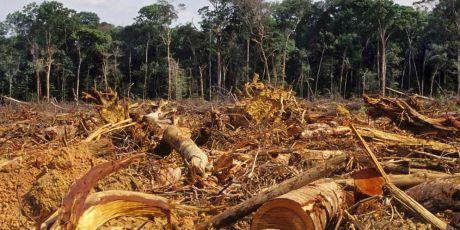
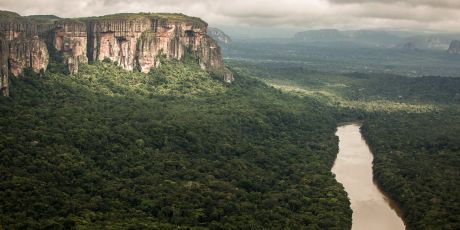
Colombia's Amazon has become a wild west for environmental destruction; criminal loggers and coca growers are swarming in and destroying everything in their path!
The Columbian government insists that this only amounts to small scale deforestation, but satellite image research shows a dramatically worsening situation.
It is therefore imperative that this secret attack on the Amazon is reined in for the sake of an eco-system that will be on death row unable to photosynthesise carbon dioxide into oxygen and regenerate sustainable soil fertility to help feed the world!
With presidential elections looming, the only way is to drive this pressing issue up the political agenda as well as making it a massive story in the national press.
The Amazon is critical to our planet's environmental resilience and produces almost a quarter of the oxygen we breathe! The Brazilian Amazon is certainly more famous than Colombia's, but it's all a part of the same complex, magical ecosystem under serious threat.
The upcoming elections mean that President Santos is vulnerable to influence on this issue. In 2016, he pushed for one of the most ambitious protection plans for the Amazon - a transnational corridor and also committed to reaching zero net deforestation by 2020. Sadly as I write he's not on track to achieve either promise.
Who is online
Users browsing this forum: No registered users and 36 guests