Greetings Namuh’s
Today’s topic is more of a serious one where I would like to discuss my findings on the topic of a cycle nearing its end.
As 2025 draws near one of the most famous predictions of Alice Bailey are soon to be tested.
I quote:” We are living in exceptional times. After trudging through the dense, materialistic, vibrations of the Kali Yuga (Iron Age) for nearly 5700 years, we have reached the crossroads of the Yugas once again, when the direction of our civilization will be altered forever.
The year 2025 signifies a watershed moment in our collective experience, for the Yuga Cycle framework based on the “Saptarshi Calendar” indicates that on 21st March, 2025, the Kali Yuga will end. This will be followed by a long transitional period of 1200 years – which the Greek philosophers called Ekpyrosis (meaning “Conflagration”) – when the decadent structures, philosophies and ideologies of the Kali Yuga will be entirely obliterated and a nascent civilization based on elevated spiritual principles shall take root, which will eventually grow into the enlightened civilizations of the ascending Yuga Cycle, culminating in the next Golden Age.
At the same time, my research also indicates that the destruction of the current Kali Yuga civilization is likely to be completed within a small window of time between 2025 and 2040, due to a combination of global wars and comet impacts. These are the end-times that the ancient prophecies warned us of, when the apocalyptic events described in the eschatological texts will be fulfilled and our reality will be drastically altered.”
https://www.woolstangray.eu/alice-baile ... ra-tantra/
This link will direct you to the the rabbit’s hiding place where I began to fall into a while back.
I will attach some useful materials and pictures to help aid the research and argument I hope we partake in regarding the matter.
Kind regards,
NEO,
Kalachakra Tantra
Kalachakra Tantra
Teach thee of the child of love hereafter.
Re: Kalachakra Tantra

Rudra Chakrin, the final king of Shambhala, riding a white horse and killing the barbarians with his spear
“In 1945, at a time when the enemy’s external threat through Hitler’s armies had just been averted, Bailey said that three recognitions must be evidenced by humanity before the year 2025, if the ‘destruction of mankind is to be averted.’ They are: 1. Recognition of the Christ spirit within. 2. Recognition of the Hierarchy. 3. Recognition of the Divine Plan. The destruction mentioned here could mean something like the great flood of the last days of Atlantis, although as Bailey points out some prophecies say that destruction by fire is also a possibility. “If humanity fails to unite under the banner of the Forces of Light against the forces of material aggression and selfishness, then the ‘fiery ordeal’ might be unavoidable.”
Teach thee of the child of love hereafter.
Re: Kalachakra Tantra

As per the prophecy, the end-time battle will occur after each of the 32 Shambhala Kings have ruled for 100 years each, for a total duration of 3200 years after the time of Buddha. Within the Eastern Buddhist tradition of China, Vietnam, Korea and Japan, the traditional date for the death of the Buddha was 949 BCE.[6] Since the first Shambhala King Suchandra, was believed to be ruling during the time of Buddha, the period of Suchandra’s rule is assumed to have extended from c. 976 – 876 BCE. Thereafter, each King ruled for a hundred years.
This sequence should have taken us to 2225 CE for the end-time battle, but, for some inexplicable reason, the 3rd Kalki King named Bhadra has been assumed to rule for 300 years, instead of the usual 100. As a result, the date of the end-time battle got extended to 2425 CE.
As I went through the numbers in the Kalachakra Tantra, I was astonished by how closely the dates and time periods in the prophecy correspond to the Yuga Cycle framework based on the Saptarshi Calendar. Here are the primary correlations that took me by surprise:
The first Shambhala King, Suchandra’s reign extended for 100 years from 976 – 876 BCE. Thus, the counting in the Kalachakra system begins from 976 BCE. In the Yuga Cycle timeline, the descending Kali Yuga ended in 976 BCE – the exact same date!
As per the Yuga Cycle timeline, the end of the descending Kali Yuga in 976 BCE was followed by a 300-year period of transition and the 2700-year ascending Kali Yuga thereafter, adding up to a 3000-year Yuga. In the Kalachakra Tantra, the rule of the 32 Shambhala kings extend for a total of 3200 years, starting from 976 BCE.
In the Kalachakra Tantra, each Shambhala king rules for 100 years, starting from 976 BCE, whereas the Yuga Cycle was tracked by the Saptarshi Calendar in which the Seven Sages spend 100 years in each nakshatra or lunar house, thereby completing a 2700-year cycle around the ecliptic. Thus, not only is the starting point of the current epoch same in both systems i.e. 976 BCE, they both use a 100-year tracking system.
These correlations clearly indicate that the Saptarshi Calendar served as the basis for determining the dates in the Kalachakra Tantra. The 100 years of rule of each Shambhala king was the 100 years that the Saptarshis spend in each nakshatra; while the beginning of the present epoch in 976 BCE in the Kalachakra system coincides with the end of the descending Kali Yuga in 976 BCE, and, effectively, the beginning of the next Yuga of 3000 years.
It is the Saptarshi Calendar that begins in the 76th year of each century BCE, and, therefore, a counting system that begins from 976 BCE and uses a 100-year reckoning must, necessarily, be based on the Saptarshi Cycle.
The reason why the end-time battle in the Kalachakra prophecy occurs in 2425 CE – exactly 400 years after 2025 CE – is because of a couple of deviations in the Kalachakra system. Firstly, as I have already mentioned, in the Kalachakra system, the 3rd Kalki King, Bhadra, has been arbitrarily assumed to rule for 300 years, instead of the usual 100. That’s 200 extra years, which should be rightly ignored for computing the date of the end-time battle.
Secondly, in the Kalachakra system, the current epoch starting in 976 BCE lasts for 3200 years, whereas in the Yuga Cycle doctrine each Yuga is of 3000-years durations. That’s another 200 extra years. It is rather odd why the Kalachakra considers the final epoch to be of 3200 years duration, when, both in the Indian and Persian doctrines, each Yuga extended for 3000 years. I wondered if the 200 extra years were added later to the Kalachakra text. My instinctive feeling was vindicated when I came across an intriguing piece of information in the Kalachakra.org website, which has been put together by Edward Henning, a renowned Kalachakra scholar, translator and Tibetan astrology expert, and the author of the book “Kalachakra Mandala”. Edward Henning observes that, There are some problems with the listing of the kalki-kings. The general list given in Tibetan texts, and used in the series of pictures shown here, contains 25 names, but the great Indian Kalacakra teacher Vibhuticandra pointed out to Tibetan colleagues that the names of the 18th and 19th in this list, Hari and Vikrama, belonged together as one name, Harivikrama. He also pointed out to them that some Tibetan lists similarly split up the name of number 24 in the list into two names, Ananta and Vijaya. This persists to this day. The advice of this great Kalacakra teacher was duly noted by the Tibetans but in practice ignored, and their misreading of the Sanskrit when translating into Tibetan was not corrected.”
Teach thee of the child of love hereafter.
-
Redbeck
- Site Admin
- Posts: 2147
- Joined: 19 Dec 2010 15:42
- Location: The Rookery, 3rd Horse Chestnut along, St Johns, Britain. Teacher leave our nuts alone!
- Contact:
Re: Kalachakra Tantra - Shambhala Saptarshi
Dear ONE,
Thank you for your stirring post which has sparked site www. 973-eht-namuh-973.com founder, content creator and architect David Denison into action, with an upgraded information that relates to items raised in your most interesting post. Kind Regards Redbeck
Please Click on the link below and follow the sign posts laid out beneath it.
https://www.973-eht-namuh-973.com/Alche ... NEW%20.htm
RED SPINNING STAR WITH
SHAMBAHALA POEM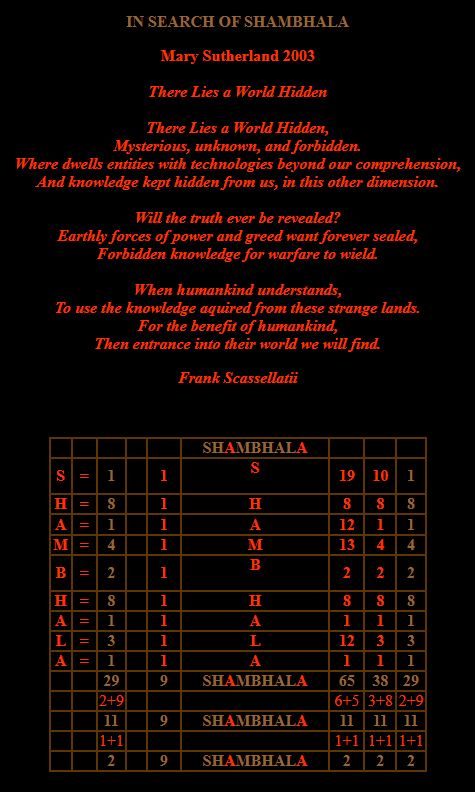
THE VOYAGE OF THE DA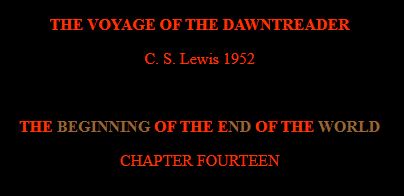
Page 159
"When I set for the last time, decrepit and old beyond all that you can reckon, I was carried to this island. I am not so old now as I was then. Every morning a bird brings me a fire-berry from the valleys in the Sun, and each fire-berry takes away a little of my age. And when 1 have become as young as the child that was born yesterday, then I shall take my rising again (for we are at earth's eastern rim) and once more tread the great dance."
Thank you for your stirring post which has sparked site www. 973-eht-namuh-973.com founder, content creator and architect David Denison into action, with an upgraded information that relates to items raised in your most interesting post. Kind Regards Redbeck
Please Click on the link below and follow the sign posts laid out beneath it.
https://www.973-eht-namuh-973.com/Alche ... NEW%20.htm
RED SPINNING STAR WITH
SHAMBAHALA POEM
THE VOYAGE OF THE DA
Page 159
"When I set for the last time, decrepit and old beyond all that you can reckon, I was carried to this island. I am not so old now as I was then. Every morning a bird brings me a fire-berry from the valleys in the Sun, and each fire-berry takes away a little of my age. And when 1 have become as young as the child that was born yesterday, then I shall take my rising again (for we are at earth's eastern rim) and once more tread the great dance."
-
Redbeck
- Site Admin
- Posts: 2147
- Joined: 19 Dec 2010 15:42
- Location: The Rookery, 3rd Horse Chestnut along, St Johns, Britain. Teacher leave our nuts alone!
- Contact:
Re: Kalachakra Tantra - Shambhala Saptarshi
SAPTARSHI ALONE XXXXXXXXXXXXXXXXXX 
SAPTARSHI A STARSHIP TEXT
XXXXXXXXXXXXXXXXXXXXXXXXXXXXXXXXXXXXXXXXXXXX RISHI
XXXXXXXXXXXXXXXXXXXXXXXXXXXXXXXXXXXXXXXXX ETYMOLOGY
The word's etymology is unknown. It has an Avestan cognate arasis (Yasna 31.5) "an ecstatic" (see also Yurodivy, Vates). Monier-Williams tentatively suggests derivation from drs "to see"(1) and he also compares Old Irish arsan, "a sage, a man old in wisdom". Manfred Mayrhofer in his Etymological Dictionary prefers a connection to either (omitted) "pour, flow" (PIE) *h1ers), or to ras "yell".
In the Vedas, the word denotes a singer of sacred hymns, an inspired poet or sage, or any person who alone or with others invokes the deities in rhythmical speech or song of a sacred character. In particular, it refers to the authors of the hymns of the Rigveda, e.g. Kutsa, Atri, Rebha, Agastya,Kushika, Vasishtha, Vyashva. Later generations regarded the Rishis as patriarchal sages or saints, occupying the same position in India history as the heroes and patriarchs of other countries, constituting a peculiar class of beings in the early mythical system, as distinct from Asuras, Devas and mere mortal men.
SAPTARSHI A STARSHIP TEXT
XXXXXXXXXXXXXXXXXXXXXXXXXXXXXXXXXXXXXXXXXXXX RISHI
XXXXXXXXXXXXXXXXXXXXXXXXXXXXXXXXXXXXXXXXX ETYMOLOGY
The word's etymology is unknown. It has an Avestan cognate arasis (Yasna 31.5) "an ecstatic" (see also Yurodivy, Vates). Monier-Williams tentatively suggests derivation from drs "to see"(1) and he also compares Old Irish arsan, "a sage, a man old in wisdom". Manfred Mayrhofer in his Etymological Dictionary prefers a connection to either (omitted) "pour, flow" (PIE) *h1ers), or to ras "yell".
In the Vedas, the word denotes a singer of sacred hymns, an inspired poet or sage, or any person who alone or with others invokes the deities in rhythmical speech or song of a sacred character. In particular, it refers to the authors of the hymns of the Rigveda, e.g. Kutsa, Atri, Rebha, Agastya,Kushika, Vasishtha, Vyashva. Later generations regarded the Rishis as patriarchal sages or saints, occupying the same position in India history as the heroes and patriarchs of other countries, constituting a peculiar class of beings in the early mythical system, as distinct from Asuras, Devas and mere mortal men.
-
Redbeck
- Site Admin
- Posts: 2147
- Joined: 19 Dec 2010 15:42
- Location: The Rookery, 3rd Horse Chestnut along, St Johns, Britain. Teacher leave our nuts alone!
- Contact:
Re: Kalachakra Tantra - Shambhala Saptarshi
SAPTARSHI ALONE XXXXXXXXXXXXXXXXX 
SAPTARSHI A STARSHIP TEXT
SAPTARISHI STARSHIPXXXXXXXXXX
SAPTARSHI A STARSHIP TEXT
SAPTARSHI THREE TABLES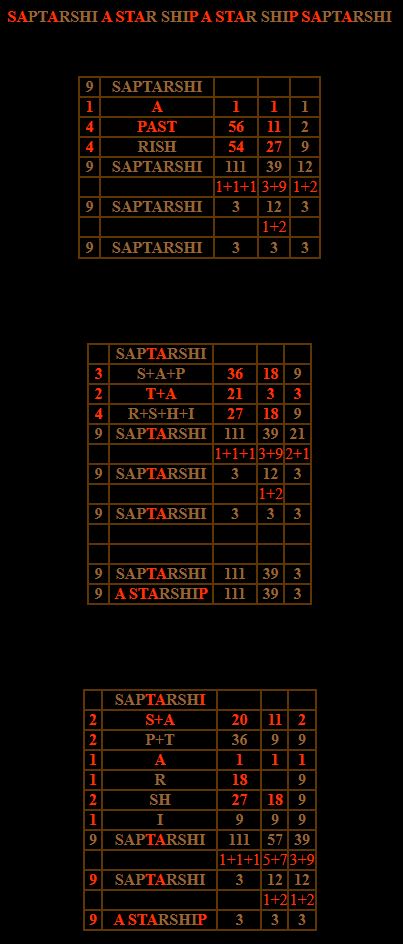
SAPTARSHI A STARSHIP TEXT
SAPTARISHI STARSHIPXXXXXXXXXX
SAPTARSHI A STARSHIP TEXT
SAPTARSHI THREE TABLES
-
Redbeck
- Site Admin
- Posts: 2147
- Joined: 19 Dec 2010 15:42
- Location: The Rookery, 3rd Horse Chestnut along, St Johns, Britain. Teacher leave our nuts alone!
- Contact:
Re: Kalachakra Tantra - Shambhala Saptarshi
SAPTARISHI LAST TABLE AND TEXT
XXXXXXXXXXXXXX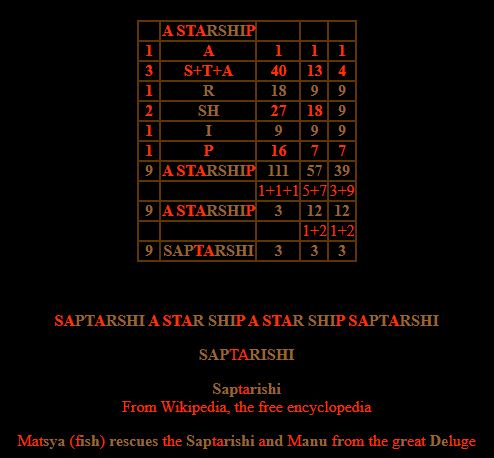
The Saptarishi (seven great yogis) (from Sanskrit:(saptarshi), a Sanskrit dvigu meaning "seven sages") are the seven rishis in ancient India, who are extolled at many places in the Vedas and Jivan literature. The Vedic Samhitas never enumerate these rishis by name, though later Vedic texts such as the Brahmanas and Upanisads do so. They are regarded in the Vedas as the patriarchs of the Vedic religion.
RED SPINNING STARXXXXXX
XXXXXXXXXXXXXX
The Saptarishi (seven great yogis) (from Sanskrit:(saptarshi), a Sanskrit dvigu meaning "seven sages") are the seven rishis in ancient India, who are extolled at many places in the Vedas and Jivan literature. The Vedic Samhitas never enumerate these rishis by name, though later Vedic texts such as the Brahmanas and Upanisads do so. They are regarded in the Vedas as the patriarchs of the Vedic religion.
RED SPINNING STARXXXXXX
Who is online
Users browsing this forum: Bing [Bot] and 10 guests